Business growth is exciting, but it also brings new operational challenges that many companies are not fully prepared for.
What works for a small business often becomes difficult to manage as operations expand. Teams grow, customer demands increase, inventory becomes more complex, and communication between departments becomes harder to control.
Without proper systems and workflows, businesses may experience operational confusion, delays, and reduced productivity.
This is why many growing businesses invest in ERP systems like Odoo to centralize operations, automate workflows, and improve efficiency.
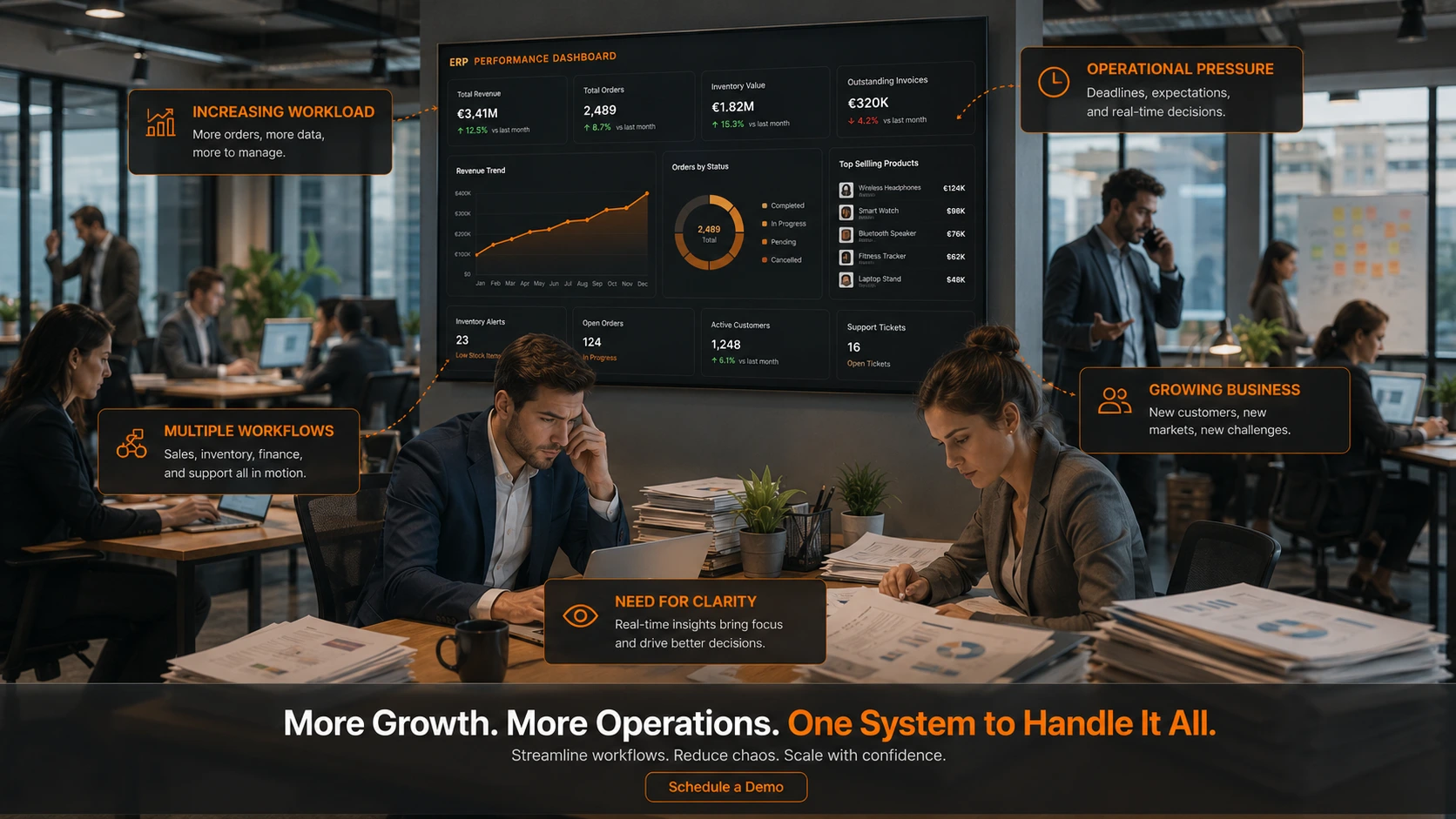
Why Operational Challenges Increase as Businesses Grow
In the early stages, businesses often rely on:
spreadsheets,
emails,
manual approvals,
disconnected software,
and informal workflows.
Initially, these methods may seem manageable.
However, as the company grows:
operations become more complex,
departments require better coordination,
customer expectations increase,
and manual systems start creating inefficiencies.
Without operational structure, growth can quickly become difficult to manage.
Most Common Operational Problems Growing Businesses Face
1. Disconnected Departments
One of the biggest challenges for growing businesses is poor coordination between departments.
For example:
sales teams may not have real-time inventory visibility,
accounting may receive delayed order information,
warehouse teams may struggle with outdated stock updates.
When departments work separately, communication gaps increase and operations slow down.
2. Excessive Manual Work
Many businesses continue using manual processes even after operations grow significantly.
Employees often spend hours:
updating spreadsheets,
entering duplicate data,
creating reports manually,
and coordinating tasks through emails.
This reduces productivity and increases the risk of human errors.
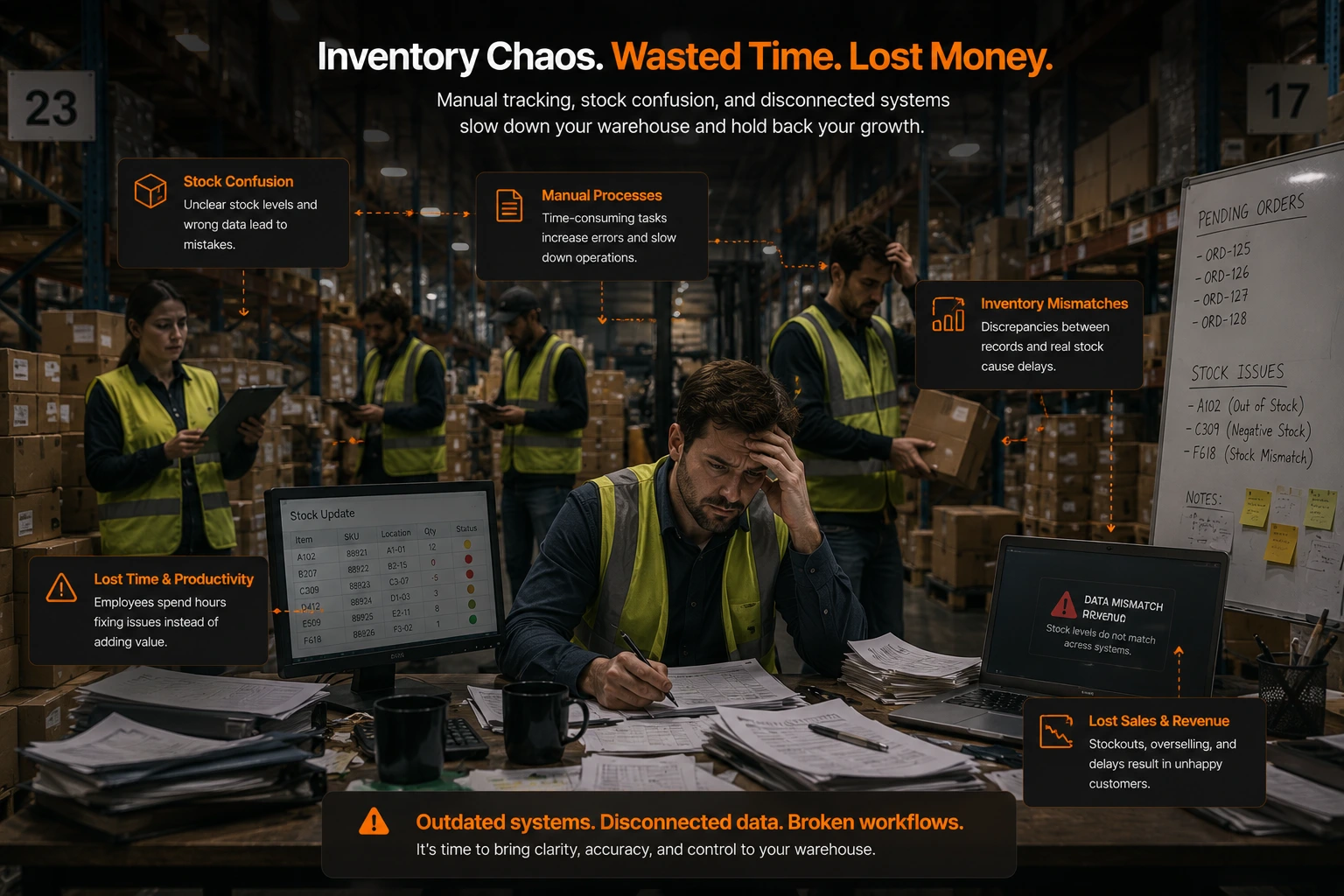
3. Inventory and Stock Management Problems
Inventory management becomes increasingly difficult as order volumes grow.
Businesses commonly experience:
stock mismatches,
delayed inventory updates,
overstocking,
stock shortages,
and warehouse confusion.
Poor inventory visibility can directly impact customer satisfaction and profitability.
4. Delayed Reporting and Poor Visibility
Business decisions require accurate and real-time information.
However, many growing companies struggle with:
delayed operational reports,
inconsistent data,
disconnected reporting systems,
and lack of centralized visibility.
Without real-time insights, management teams may make decisions using outdated information.
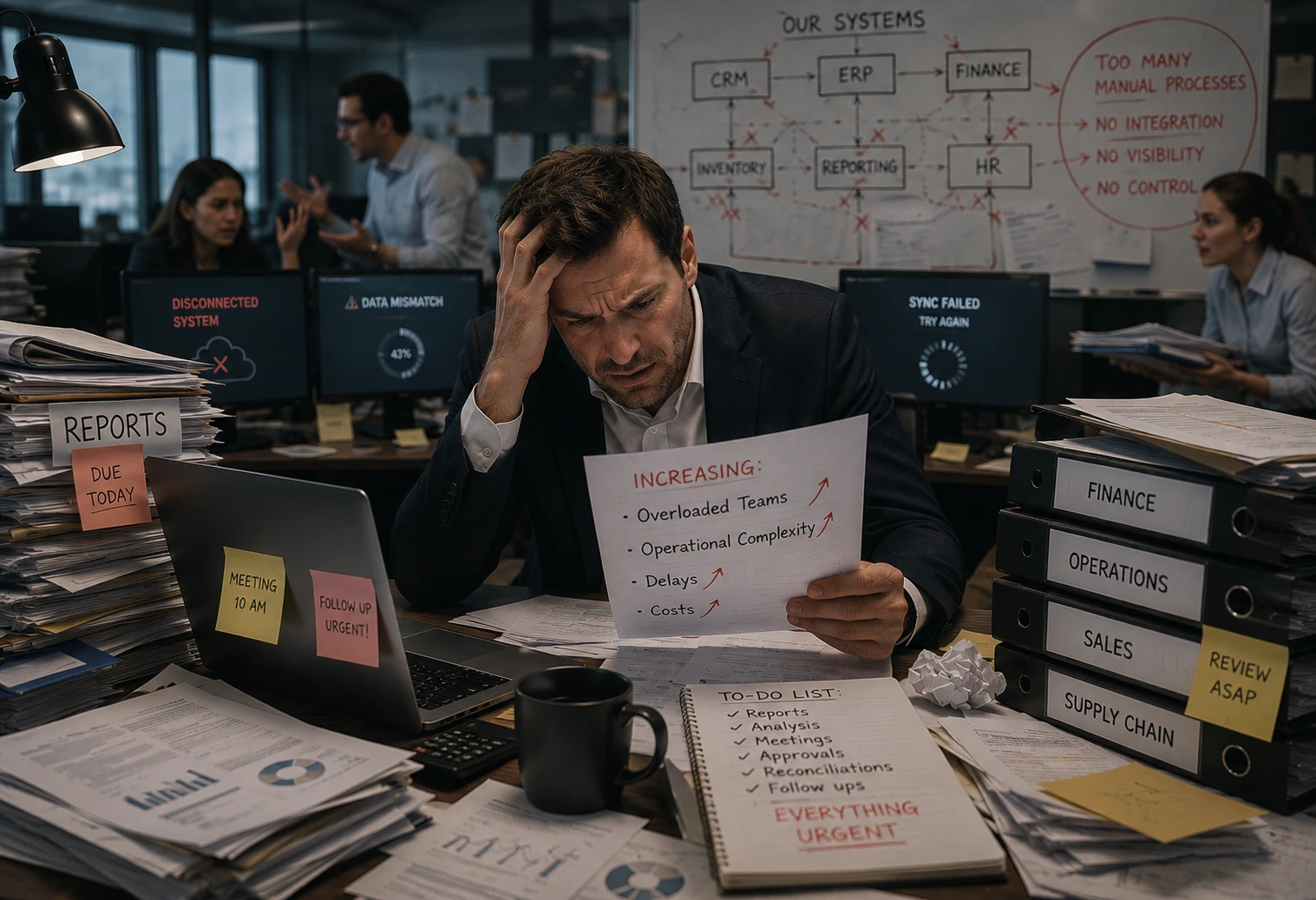
5. Difficulty Managing Multiple Software Systems
As businesses expand, they often add separate software tools for:
accounting,
CRM,
inventory,
HR,
and project management.
While these tools solve individual needs, disconnected systems create:
duplicate work,
data inconsistencies,
communication delays,
and operational inefficiencies.
Managing multiple systems eventually becomes difficult and expensive.
6. Inefficient Approval Processes
Manual approval systems often create delays in:
purchase approvals,
invoice processing,
inventory requests,
and operational workflows.
As operations scale, these delays reduce business agility and slow productivity.
7. Difficulty Scaling Operations
Growth should improve business opportunities, not create operational chaos.
However, many businesses struggle to scale because their systems and workflows cannot handle increasing operational complexity.
Common signs include:
overloaded teams,
increasing administrative workload,
slower response times,
and process confusion.
These issues often indicate that the business needs more structured operational management.
How ERP Software Solves Operational Challenges
ERP software helps businesses centralize operations into one integrated system.
Instead of managing separate workflows manually, businesses can automate and streamline operations through connected processes.
ERP systems improve:
operational visibility,
workflow automation,
collaboration,
reporting,
and process efficiency.
How Odoo Helps Businesses Improve Operational Efficiency
Odoo provides an integrated ERP platform designed to help businesses manage growing operations more efficiently.
With Odoo, businesses can centralize:
inventory management,
accounting,
CRM,
HR,
purchasing,
manufacturing,
project management,
and reporting
within one connected system.
This allows departments to collaborate more effectively while improving operational transparency.
For example:
When a sales order is confirmed:
inventory updates automatically,
accounting records synchronize,
warehouse teams receive notifications,
and management gains real-time visibility into operations.
Real Business Example
Imagine a growing manufacturing company managing operations manually.
As customer demand increases:
inventory errors become frequent,
reports take longer to generate,
departments struggle to coordinate,
and operational delays increase.
After implementing Odoo ERP:
workflows become automated,
inventory updates in real time,
reports generate instantly,
and teams collaborate more efficiently.
This helps the business improve productivity while reducing operational complexity
Benefits of Centralized Business Operations
Improved Productivity
Automation reduces repetitive manual tasks.
Better Collaboration
Departments work with shared real-time information.
Faster Decision-Making
Live dashboards improve operational visibility.
Reduced Errors
Integrated systems reduce duplicate data and manual mistakes.
Scalable Operations
ERP systems support long-term business growth more effectively..

Why European Businesses Focus on Operational Efficiency
European businesses increasingly prioritize:
automation,
scalability,
operational transparency,
workflow optimization,
and digital transformation.
Industries such as manufacturing, logistics, retail, and wholesale distribution depend heavily on efficient operations to remain competitive.
ERP systems like Odoo help businesses simplify operational management while supporting long-term growth and business stability.
Signs Your Business Needs ERP Software
Your business may benefit from ERP implementation if you experience:
communication gaps between departments,
inventory mismatches,
delayed reporting,
operational bottlenecks,
excessive manual work,
disconnected software systems,
or difficulty managing growth.
These challenges often indicate the need for centralized operational management.
Conclusion
Operational challenges are common as businesses grow, especially when manual workflows and disconnected systems can no longer support increasing complexity.
Without efficient processes, businesses may struggle with communication gaps, delayed reporting, inventory problems, and operational inefficiencies.
ERP solutions like Odoo help businesses centralize operations, automate workflows, and improve collaboration across departments.
Companies that invest in operational efficiency are better positioned for scalable growth, improved productivity, and long-term success.
